As an Amazon Associate, we earn from qualifying purchases. If you buy through links on this page, we may earn a commission at no extra cost to you.
By Vimalanathan. About the author: Vimalanathan is the founder of Hair Health Cares. He researches ingredients, dermatology guidance, and independent reviews to help readers compare hair and skin care without hype. Learn more on our About page.
Last checked: October 14, 2026. Prices, availability, ingredients, and specs change frequently. Please verify the price, ingredients, and usage instructions on the retailer / manufacturer page before buying.
How we picked: This guide to the best serum for hair growth is based on research synthesis, not hands-on testing. We compared ingredients, evidence, safety, price, and user feedback.
Medical disclaimer: Informational only, not medical advice. Talk to a dermatologist / doctor before starting any treatment, especially for hair loss, skin conditions, or if pregnant / nursing. Stop use if irritation occurs.
Are you looking for the best serum for hair growth and thickness, but feel lost in a sea of bottles and big promises? You are not alone. Thinning hair worries many people, and the beauty aisle can make it hard to know what is real.
You don’t have to guess. In this guide, we will look at which ingredients have real science behind them, how to choose a serum that fits your scalp, and how to use it the right way.
How Hair Growth Serums Work
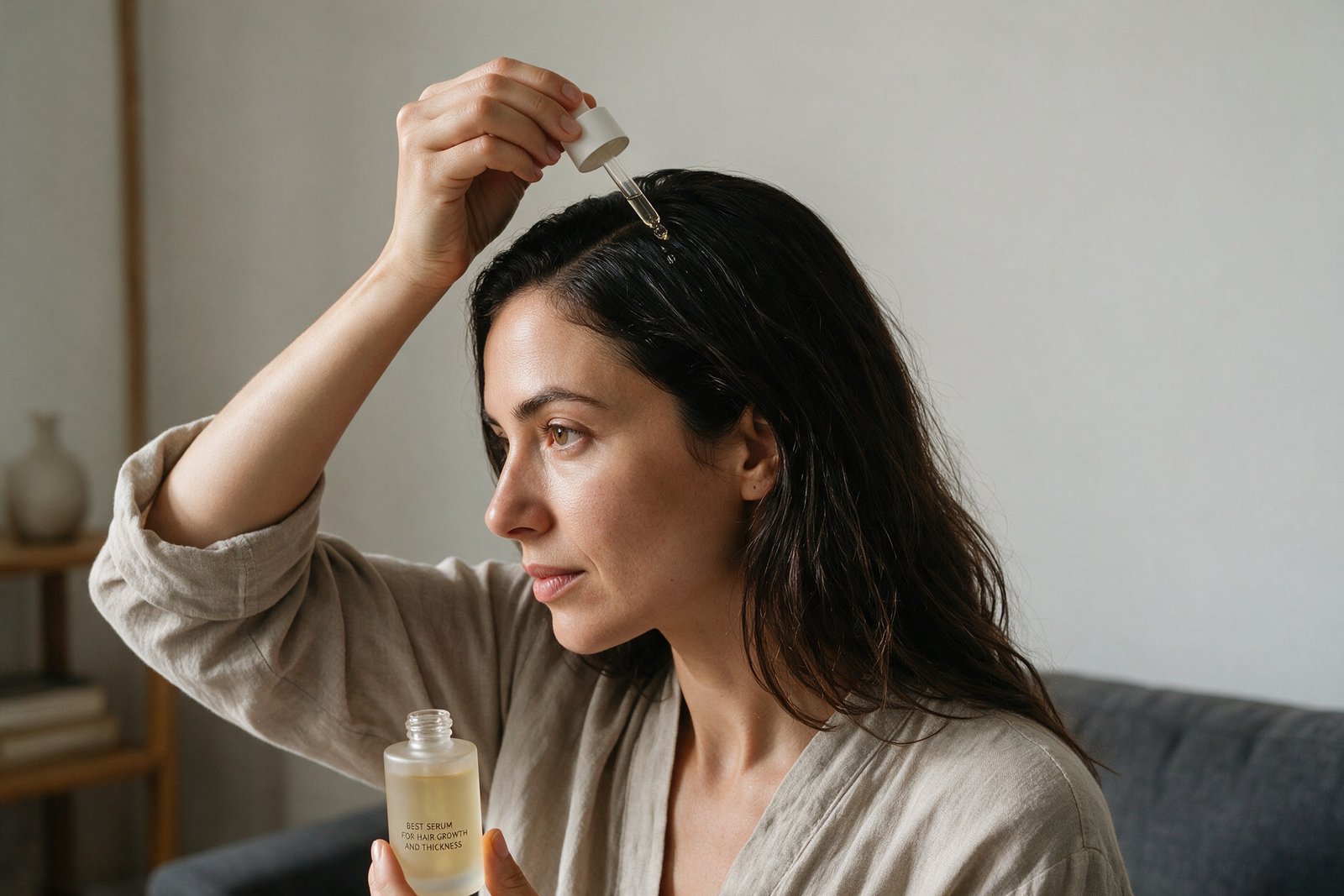
A hair serum is a lightweight liquid that you apply directly to your scalp. Most serums try to support the growth phase of your hair cycle, calm scalp irritation, improve blood flow, and make each strand look fuller.
A serum cannot create brand-new follicles. But it can help the follicles you already have, especially small, weak ones that have started to shrink.
Why Scalp Health Matters
Healthy hair starts at the scalp. Dandruff, product buildup, and inflammation can all stress your follicles. A clean, balanced scalp gives any serum a better chance to work.
What Makes the Best Serum for Hair Growth and Thickness?
Not every serum is created equal. Look for three things: active ingredients that have been studied, a formula your scalp can tolerate, and a product you will actually use regularly. A fancy bottle means very little if the label is mostly water and fragrance.
Minoxidil: The Most Proven Option
Topical minoxidil is FDA-approved for hair loss in men and women, and the American Academy of Dermatology notes it can reduce hair loss and stimulate new growth. You can read more in this dermatologist guide to treating genetic hair loss.
There are two things to know. How soon you notice any change varies by person, and you usually need to keep using it to keep any gains. Some people also notice extra shedding early on, which often settles down.
Peptides: A Gentle Option
Peptides are small proteins that may support the scalp and the hair follicle. Peptide serums are popular for people who want a gentler routine without medicated ingredients. The research is smaller than for minoxidil, so expect gradual, modest results.
Rosemary Oil: A Popular Natural Helper
Rosemary oil gets a lot of attention online. One randomized trial with 100 people compared rosemary oil with 2% minoxidil over six months, and it found no significant difference in hair count between the two groups. Here is the study: rosemary oil compared with minoxidil.
It is encouraging, but it is one small study, and it used the lower strength of minoxidil. Think of rosemary oil as a helpful extra, not a guaranteed fix.
Caffeine and Patented Complexes
Caffeine is common in hair serums because lab studies suggest it may support follicles. Ingredients like Redensyl and Capixyl are also popular in “density” formulas. Most of the research comes from the brands that make them, so keep your expectations realistic.
Serum Types Compared
Use this table to compare the best serum options side by side.
| Ingredient | Best For | Evidence Level | What to Know | Scalp Feel |
|---|---|---|---|---|
| Minoxidil | Active thinning at the crown or hairline | Strong | Follow the product label; talk to a dermatologist about expectations. | Can cause dryness or itching |
| Peptides | Overall fullness and a gentle routine | Moderate | Follow the product label; results vary by person. | Light and non-greasy |
| Rosemary oil | Natural routine and scalp care | Limited | Follow the product label; results vary by person. | Can feel oily; may irritate |
| Caffeine | Early thinning and regular support | Limited | Follow the product label; results vary by person. | Light and fresh |
How to Choose the Best Serum for Your Scalp Type
The right serum depends on your hair goals and your scalp. Here is a simple way to decide.
For Oily Scalps
Pick a lightweight, water-based serum. Heavy oils can leave your roots greasy and may cause buildup.
For Dry or Flaky Scalps
Look for soothing ingredients and a gentle formula. Avoid products with a lot of alcohol, because they can dry your scalp even more.
For Sensitive Scalps
Choose fragrance-free formulas and test a small spot first. Stop using any product that causes burning, redness, or strong itching.
For Active Hair Loss
If you are losing hair quickly or in patches, talk to a dermatologist first. A serum may help, but you should know what is causing the loss.
Best Serum for Women: Frizz, Shine & Styling
Many women use a serum mainly for frizz, shine, and styling — not just growth. Anti-frizz serums coat the hair shaft with silicones and natural oils such as argan or jojoba, which smooth the cuticle, add shine, and help block the humidity that causes frizz. If frizz is your main concern, choose a lightweight formula made for your hair type: fine hair does best with a light silicone serum, wavy and curly hair usually needs a frizz-control formula with argan, jojoba, or coconut oil, straight hair benefits from a light shine serum, thick hair often needs a moisture-locking formula, and dry or damaged hair benefits from ceramides plus hydrating oils.
Heat protection is another common reason women reach for a serum. If you blow-dry, flat-iron, or curl your hair, look for a serum made for heat protection and apply it to damp hair before styling, following the product label. A serum cannot undo heat damage, but it can help reduce further dryness and breakage from hot tools.
Women-specific picks to consider:
- Augustinus Bader Hair Oil — a nourishing oil for all hair types.
- Rogaine Women’s 5% Minoxidil — a minoxidil option for thinning hair. Follow the product label exactly and talk to a clinician first.
- Kérastase Serum Extentioniste — a ceramide serum for damaged hair.
- Happy Head TopicalRx Solution — a prescription option for pattern hair loss. Talk to a clinician; do not start a prescription product without medical guidance.
- Luseta Biotin Hair Growth Serum — a biotin and argan oil serum for dry or damaged hair.
These picks were folded into this guide from our former women-specific serum post, which now redirects here. Verify ingredients, reviews, and the current label before buying.
For Postpartum and Color-Treated Hair
Shedding after childbirth is common and usually temporary, but it can feel alarming. Do not start any treatment — including a serum — without talking to a clinician or dermatologist first, especially if you are pregnant or nursing. Follow the product label, and avoid any product that promises fast regrowth.
If your hair is color-treated, choose a serum made for color-treated hair. A serum can help protect color-treated hair and add shine, but a formula not made for color-treated hair may strip color or leave buildup. Patch-test first, follow the product label, and stop use if you get irritation.
How to Apply Hair Serum for Best Results
Using your serum the right way matters as much as the ingredients. Follow these steps:
- Start with a clean scalp that is dry or lightly towel-dried.
- Part your hair into sections, especially around thinning areas.
- Apply the serum directly to the scalp, not just the hair.
- Massage gently with your fingertips for one to two minutes.
- Let it dry naturally, and wash your hands afterward.
Follow the product label for how and when to apply it. Take a photo in the same light from time to time so you can track changes.
Common Mistakes to Avoid
- Expecting fast results. Hair grows slowly and results vary by person. Follow the product label and talk to a dermatologist about realistic expectations.
- Using too much. More product does not mean faster growth. It can just cause buildup.
- Mixing too many products. Using several active serums at once can irritate your scalp.
- Believing fast-result claims. Real results take time. Be careful with promises of new hair in a few days.
Healthy Habits That Support Thicker Hair
A serum works best when your daily habits also support hair growth and thickness. Eat enough protein, iron, and vitamin D, because low levels can lead to shedding. Be gentle with tight hairstyles and high heat, and try to manage stress and get enough sleep.
When to See a Doctor
See a doctor or dermatologist if your hair loss is sudden, patchy, or comes with pain, redness, or scarring. Thyroid problems, hormone changes, certain medicines, and low nutrients can all cause thinning, and a serum cannot fix those causes.
Frequently Asked Questions
What is the best serum for hair growth and thickness?
It depends on your goal. Minoxidil has the strongest evidence for hair regrowth, while peptide and botanical serums are popular for a gentler routine. The right choice is one that fits your scalp and that you can use every day.
How long does a hair growth serum take to work?
How soon you notice any change varies by person and depends on the cause, consistency, and overall health. Follow the product label and talk to a dermatologist about realistic expectations. Hair grows slowly, so early changes are small.
Can natural serums work as well as minoxidil?
Natural serums can support scalp health, and some early studies look promising. But the evidence is stronger for minoxidil.
Can men and women use the same serum?
Many serums are made for everyone. Always read the label, and ask a doctor first if you are pregnant or breastfeeding.
Do I have to use a serum forever?
Usually, yes. If the hair loss is ongoing, results often fade after you stop.
Can hair serums cause side effects?
Some people get itching, dryness, or redness. Test a small area first, and stop if your scalp reacts badly.
Final Thoughts on Hair Growth and Thickness
Thicker, fuller hair takes patience, a smart routine, and realistic expectations. The best serum for hair growth and thickness is one with proven ingredients, a formula your scalp likes, and a routine you can keep up. Start simple, track your progress, and talk to a dermatologist if you are unsure. In the end, the best serum is the one you will use consistently.
This article is for general information and is not medical advice.